Transport Safety Expert — J. J. Keller & Associates, Inc.
Use Taxes: Get the Credentials if Traveling in These States
To avoid penalties and delays, make sure your trucks have the proper credentials prior to operating into or through any of these states.
Published On: 09/04/2024


Written by:
Corrina Peterson
The International Fuel Tax Agreement (IFTA) simplifies fuel tax reporting for carriers traveling through multiple jurisdictions. However, several states assess mileage or highway use taxes in addition to the fuel use tax.
To avoid penalties and delays, make sure your trucks have the proper credentials prior to operating into or through any of these states.
Connecticut highway use tax
In Connecticut, the highway use tax (HUT) applies to eligible motor vehicles weighing 26,000 pounds or more. The HUT accrues based on a vehicle’s weight and the number of miles driven in the state. Per-mile tax rates increase based on vehicle gross weight, ranging from 2.5 to 17.5 cents per mile.
Carriers subject to the tax must:
- Obtain HUT permits, and
- File quarterly returns and remit the tax to the Department of Revenue Services.
Kentucky weight-distance tax
The Kentucky weight-distance tax is known as the KYU number. This program applies to all vehicles 60,000 lbs. or more.
Carriers subject to the tax must:
- Obtain a KYU license,
- Provide a list of vehicles subject to the weight-distance tax, and
- File quarterly reports, even if no tax is due.
Carriers can also purchase a one-time temporary KYU permit per truck if not making regular trips through the state.
New Mexico weight-distance tax
The New Mexico weight-distance tax applies to all vehicles 26,001 lbs. or more.
All carriers operating on New Mexico highways must:
- Register and apply each year for a New Mexico Weight-Distance Tax Electronic Permit for each vehicle and then report and pay weight-distance tax quarterly, or
- Pay the trip tax each time they enter or exit the state.
New York highway use tax
New York’s highway use tax (HUT) applies to motor carriers operating any of the following on the public highways in New York:
- Automobile, truck, tractor, or other self-propelled device, alone or in combination with any trailer, semi-trailer, or dolly, with a gross weight more than 18,000 pounds; or
- Truck with an unloaded weight more than 8,000 pounds; or
- Tractor with an unloaded weight more than 4,000 pounds.
The HUT is based on the gross or unloaded weight of the motor vehicle and the number of miles the vehicle traveled on all state public highways.
All carriers subject to the tax must:
- Obtain a certificate of registration and decal for each motor vehicle subject to the tax, and
- File the highway use tax return, on a monthly, quarterly, or annual basis depending on the amount of the preceding calendar year's tax liability.
Carriers only occasionally operating a motor vehicle in New York State can get a trip certificate of registration instead of registering, obtaining a decal, and filing HUT returns.
Oregon weight-mileage tax
Oregon’s mileage tax applies to all carriers, private and for-hire, operating both intrastate and interstate, with vehicles having a combined weight over 26,000 pounds. The weight-mile tax is based on the carrier’s declared weight of the vehicle and the distance in which the vehicle travels in Oregon.
Carriers must file and pay the Oregon weight-mile tax on a monthly or quarterly basis.
Easily check your route
Understanding that there’s more to use taxes than just IFTA can help keep you out of trouble under other use tax programs. Use the Permit Advisor wizard in FleetMentor for a quick summary of the federal and jurisdictional permits you will need to operate and transport a specific shipment.
Not a FleetMentor user? Start your 30-Day Free Trial today!
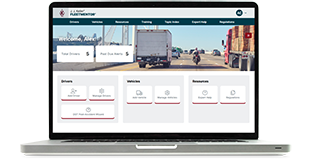
J. J. Keller® FleetMentor® Service
The J. J. Keller® FleetMentor® System serves and supports thousands of transportation professionals every day with problem-solving tools and guidance. Whether you have one truck or a thousand, a fleet of commercial motor vehicles or F-150s, or haul goods or provide services — FleetMentor has you covered.
You may also enjoy the following articles:
Sign up for our newsletter!
We'll help you stay on top of regulations, best practices, and fleet industry news. Sign up to receive a monthly email notification with links to our most recent blog articles, free resources, and event invites.