Transport Safety Expert — J. J. Keller & Associates, Inc.
Driver Qualification: Timing Matters for 5 Critical Steps
A fleet of properly qualified drivers depends on knowing when to complete each step in the process. Here are five critical steps to consider.
Published On: 02/26/2024


Written by:
Corrina Peterson
A fleet of properly qualified drivers depends on knowing when to complete each step for new drivers without causing additional costs, work, or violations.
1. Pre-hire motor vehicle records (MVRs): Commercial driver’s license (CDL) and non-CDL drivers
Licensing systems update at least monthly with violations and crashes from other jurisdictions. Carriers do not want to miss a recent crash or unsafe driving violation. The regulations allow carriers to run an MVR up to 30 days after the hire date. As a risk management best practice, run the MVR within 30 days of the hire date before the driver operates a commercial motor vehicle (CMV).
2. CDL drivers’ proof of medical certification MVRs
The MVR must be in the driver qualification (DQ) file within 15 days of each DOT medical exam. The medical card is temporary proof of certification during those 15 days. If a carrier requests an MVR too soon, a week after the exam, for example, they may have to rerun the MVR until it reflects the new certification date.
To meet the 15-day requirement, a CDL driver should submit each new medical card to the licensing agency no more than five days after the exam to allow for the 10 days that the licensing agency has to update the CDL Information System (CDLIS) with the new information.
Some carriers accept a newly hired CDL driver’s current medical certification with time left until the driver needs a new exam. In that case, a copy of the MVR must be placed in the DQ file before the driver operates a CMV.
3. CDL or Commercial Learner’s Permit (CLP) holder placement in a DOT drug and alcohol testing program
Individuals cannot be subject to Part 382 DOT testing until they hold at least a CLP. If a driver intending to obtain a CLP is in only a ride-along observational status, for example, this would be too soon to be in a DOT testing program.
4. The first drug test for an employee that transfers to a safety-sensitive position
When someone transfers to a safety-sensitive position from a non-CDL CMV or non-regulated driving position while at the same employer, the initial test in that employer’s DOT program must be a pre-employment test, despite already working for them. A random test cannot be the first DOT drug or alcohol test for a driver who is upgrading to a CDL License or just now utilizing an existing CDL with a carrier.
5. CDL driver pre-employment drug test and full query
A driver must be in the carrier’s random testing pool within 30 days of the pre-employment test and no later than operating a CDL CMV in support of the carrier’s business. If the driver is not placed in the DOT random pool within 30 days due to hiring delays, the driver will have to go through another pre-employment test.
Fleetmentor can help
Carriers must time driver qualification steps to meet regulatory requirements, avoid additional costs, and review critical information relevant to hiring decisions. Use the Fleetmentor Employee & Drivers tool to manage your employee and driver information. Save time and ensure compliance with safety regulations with the built-in alert function and employee/driver reports.
Not a FleetMentor user? Start your 30-Day Free Trial today!
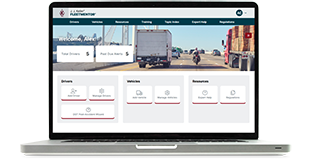
J. J. Keller® FleetMentor® Service
The J. J. Keller® FleetMentor® System serves and supports thousands of transportation professionals every day with problem-solving tools and guidance. Whether you have one truck or a thousand, a fleet of commercial motor vehicles or F-150s, or haul goods or provide services — FleetMentor has you covered.
You may also enjoy the following articles:
Sign up for our newsletter!
We'll help you stay on top of regulations, best practices, and fleet industry news. Sign up to receive a monthly email notification with links to our most recent blog articles, free resources, and event invites.